
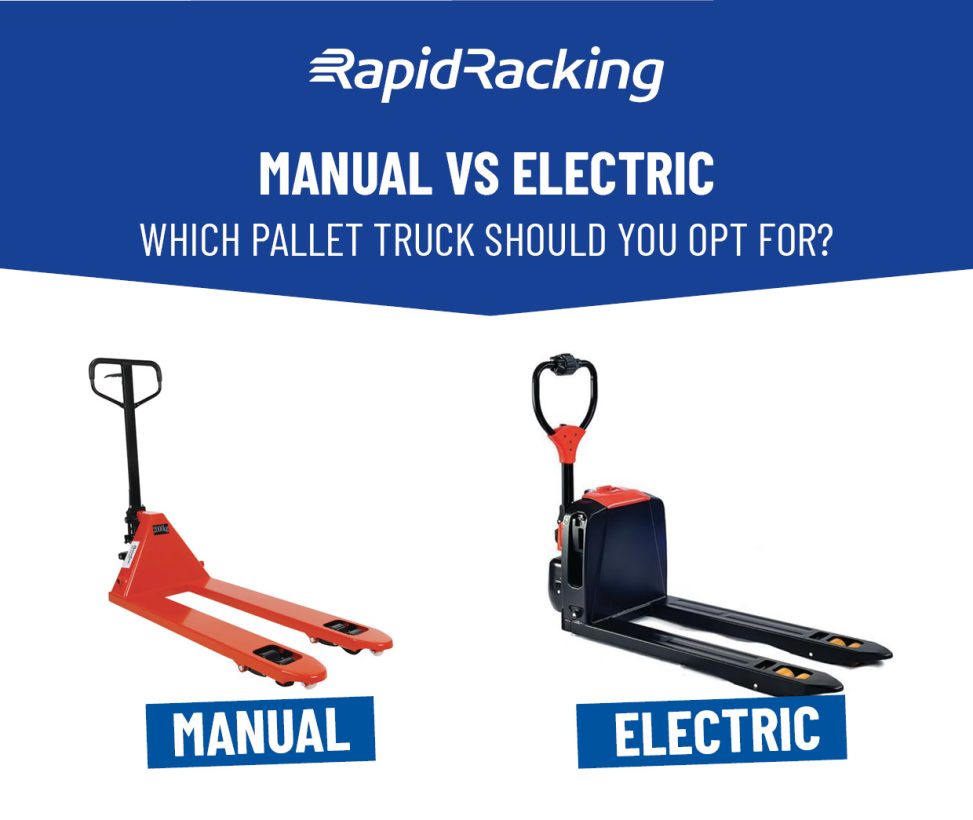
Manual: pros
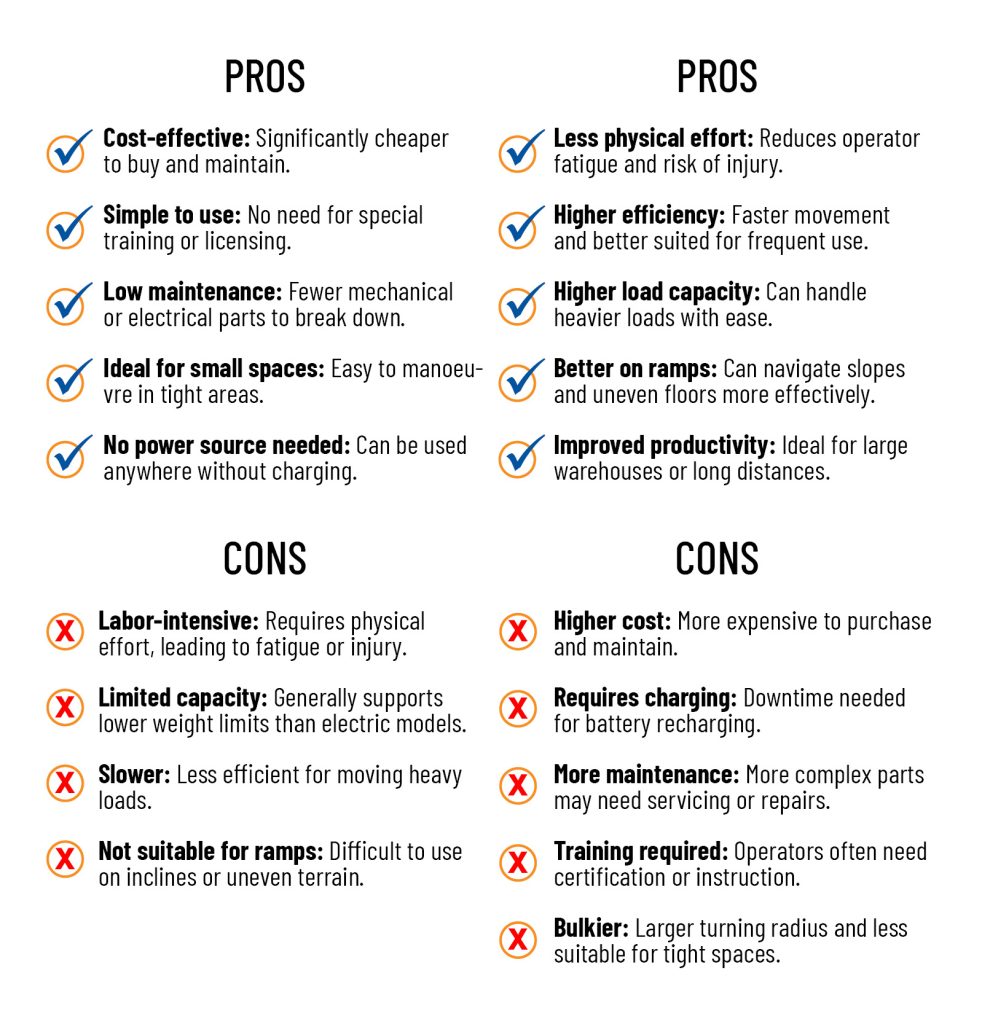
Cost-effective: significantly cheaper to buy and maintain
Simple to use: no need for special training or licensing
Low maintenance: fewer mechanical or electrical parts to break down
Ideal for small spaces: easy to manoeuvre in tight areas
No power source needed: can be used anywhere without charging
Manual: cons
Labour-intensive: requires physical effort, leading to fatigue or injury
Limited capacity: generally supports lower weight limits than electric models
Slower: less efficient for moving heavy loads
Not suitable for ramps: difficult to use on inclines or uneven terrain
Electric: pros
Less physical effort: reduces operator fatigue and risk of injury
Higher efficiency: faster movement and better suited for frequent use
Higher load capacity: handles heavier loads with ease
Better on ramps: can navigate slopes and uneven floors more effectively
Improved productivity: ideal for large warehouses or long distances
Electric: cons
Higher cost: more expensive to purchase and maintain
Requires charging: downtime needed for battery recharging
More maintenance: more complex parts may need servicing or repairs
Training required: operators often need certification or instruction
Bulkier: larger turning radius and less suitable for tight spaces